


 Listen Live
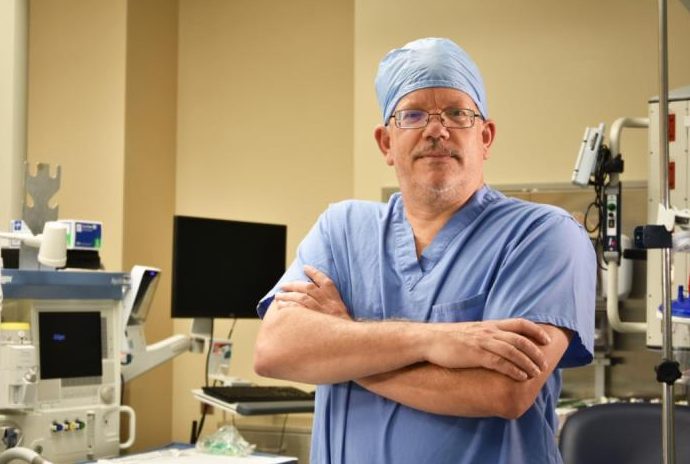

(607NewsNow) — Back pain is common. About four out of every five adults have lower back, or lumbar, pain at some point in their lives. Not everyone will experience lower back pain in the same way. It can begin with a dull ache or sudden sharp pain and can last a few days to a few weeks. For Joanie Kuceyeski, it lasted much longer.
Joanie is retired. She fills her days with a myriad of group activities, but looks forward to warmer weather, when the trails are open, and she can go hiking with friends. Joanie’s hobbies came to an abrupt stop when her back pain became severe and unbearable.
“Five years ago, I had pain in my upper buttocks and lower back. About one and a half years ago, my foot started to go to sleep, and I realized this was nerve.”
The lumbar spine supports much of the body’s weight, affects posture and gait, and controls leg movement. Due to her symptoms, Joanie knew her lower back was not properly positioned.
“The lumbar 4-5 spinal segment was off by four millimeters at the beginning of this journey and a year later it was off by six millimeters. It concerned me.”
When the spinal bones are out of alignment, the body’s natural balance is disrupted, leading to a cascade of physical problems, like the pain and discomfort Joanie experienced. She turned to Dr. James Mills, a neurosurgeon at Arnot Health, a member of Centralus Health, for help.
“The first thing I try to do is make sure patients have an understanding of their conditions and that I’m empathetic to their conditions,” says Dr. Mills.
Joanie says, “I immediately liked his attitude because he came in and said, ‘From looking at your file, it looks as if you’ve been very active your whole life.’ I have. I can’t do it anymore, and he knew I wanted to get back to it.”
Joanie wanted to avoid any surgical treatment. If people do not respond to conservative therapies, and the pain is no longer tolerable, doctors will recommend surgery. After years of trying alternative methods, she asked Dr. Mills for more information about a pedicle screw fusion with robotic assistance and L4-L5 laminectomy; a surgery that would remove the arch in her spine and create more stability.
With the help, guidance, and reassurance of the neurosurgery team at Arnot Health, Joanie finally found the relief she was hoping for.
“In January of 2025, I got the surgery and immediately, the numbness went away. I did not have any pain in my back. It was just at the site of injection.”
After a short hospital stay, Joanie went home with little to worry about during recovery and focused on slowly reintroducing herself to her favorite hobbies. Before long, she was making her way back up the rocky terrain of a popular Northeast hiking trail.
“In September, one of my friends up in Maine and I hiked up Mosquito Mountain. It’s a 1200-foot elevation gain in a mile and a quarter. It took us a while, but we made it. I was absolutely ecstatic.”
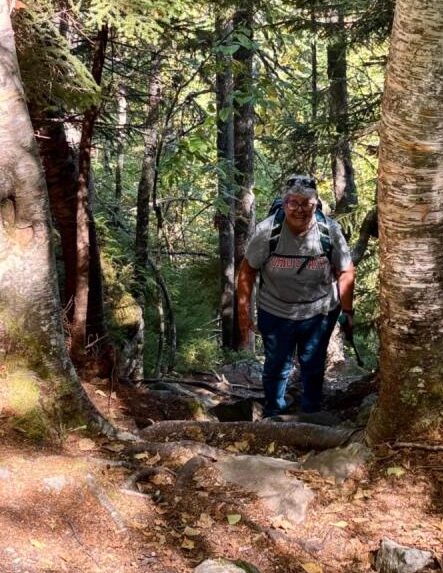
Photo of Joanie hiking.
Though the treatment plan didn’t go the way she expected, Joanie says the end result was everything she could’ve hoped for and more.
“This was completely successful. I’m 100% back to the way I was before I had this problem five years ago.”
Dr. Mills says helping patients, like Joanie with debilitating pain, seeing their pain go away and watching their quality of life improve is what he loves most about the job.
“It’s the best specialty, the best field ever,” says Dr. Mills.
The Arnot Health Neurology Program is committed to providing comprehensive care for brain and spine disorders and traumatic injuries, lower-back disorders, and other neurological diseases. Arnot Health’s neurology office is located at 455 Maple Street, Suite 1, Big Flats.
Cayuga Neurologic Services has highly trained, experienced neurologists who specialize in diagnosing and treating disorders of the central nervous system, comprising the brain, the spinal cord, and the nerves. Cayuga Neurology is committed to delivering individualized care to patients dealing with a range of neurological disorders such as memory loss, migraines, headaches, epilepsy, Parkinson’s disease, multiple sclerosis, neuropathies, and stroke-related conditions. Cayuga Health’s Neurology offices are located at 905 Hanshaw Road, Suite A, Ithaca and 260 Tompkins Street, Cortland.